Hey there! If you’re deep in the world of piping systems for wastewater, stormwater, marine, or even industrial applications, you’ve probably heard two things a lot: duck valves are total workhorses for backflow prevention… and people keep asking if they cause head loss. As a duck valve supplier, I get this question ALL the time—because head loss isn’t just a tech term; it directly impacts your system’s efficiency, energy costs, and even whether your project runs on budget or gets delayed. Let’s break this down like we’re chatting over a coffee, no stuffy engineering jargon (well, just enough to get the point across).
First, let’s cut to the chase: yes, duck valves do cause some head loss in pipes. But here’s the big caveat it’s not the massive, deal-breaking kind you might get with other check valves. Let’s start with what a duck valve even is for folks new to the game—those flexible, rubber one-way valves shaped like… well, a duck’s bill. They open with flow pushing one way and seal tight to block reverse flow, no actuators, no moving parts to break. Super reliable, low-maintenance, and way simpler than swing or ball check valves for certain use cases.
Now, what is head loss, exactly? For the uninitiated, it’s the amount of pressure drop (aka energy loss) that happens when fluid moves through a pipe, a fitting, or a valve. Think of it like squeezing a garden hose—squish the end, the water comes out faster, but you’re losing a bit of that pressure to the squeeze. Head loss is measured in feet or meters of fluid, and it depends on a bunch of factors: valve size, flow rate, fluid viscosity, the valve’s design, and even how well it’s installed.
So why do duck valves cause head loss? Unlike straight-through pipe sections, duck valves have that tapered, flared shape. When flow pushes through, the bill opens—so that initial part where the rubber collapses flat (or almost flat) and then flares open creates a tiny restriction. That restriction is where the head loss comes from. But here’s the thing: compared to other common check valves, duck valves have way less head loss than, say, a swing check valve, which has a flapper that swings into the flow path and creates a bigger obstruction when open. I’ve seen projects where swapping a swing check for a duck valve cut head loss by 30% or more—game-changer for systems that need steady flow, like storm sewers or marine overboard discharges.
But wait, not all duck valves are the same. That’s why our product line has different types for different jobs, and each has slightly different head loss numbers. Let’s walk through the main ones here, since matching the right valve to your application is key to minimizing head loss in the first place.
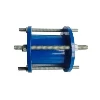
First up, our Flange Spool Type Duckbill Valve. This one’s a spool-style design that bolts right between two flanges in your pipe, super easy to install for retrofits or new builds. The flange connections make it straight-through once open, so the restriction is minimal—we’ve tested at 10 feet per second (a common flow rate for storm sewers), head loss is only about 0.2 feet, which is nothing. It’s perfect for larger pipelines, like municipal storm sewer lines, because the flange mounting keeps it aligned properly, no weird gaps that mess with flow.
Then there’s the Rubber Duckbill Check Valve. This is the classic, universal duck valve—flexible rubber (usually EPDM or neoprene, depending on the fluid) with a straight inlet and tapered outlet. It’s super versatile, works for everything from wastewater treatment to marine bilge systems. Head loss here is a touch higher than the flange spool type, but still way low. At 8 feet per second, we’re looking at around 0.3 feet of head loss. The reason it’s a tiny bit higher is because the inlet is a bit more tapered on smaller sizes, but for most small to medium lines, this is negligible.
If you’re dealing with a line that’s hard to access, or you don’t want to mess with flange welding, the Slip-on Rubber Clamp Connection Duckbill Check Valve is your guy. This one slips over the end of a pipe and clamps on with stainless steel clamps—super fast to install, no special tools. Head loss here is almost identical to the rubber duckbill check valve, because the core design is the same; the clamp just gives you a tight seal without flanges, so flow stays smooth. I’ve used these for portable pump systems where you need to hook up and take down fast, and we never had issues with head loss being a problem there.
Our SEALAND Duckbill Valve is another workhorse, specifically designed for marine applications. The rubber is resistant to saltwater and UV, so it holds up way longer in harsh marine environments. Head loss here is even lower than the standard rubber duckbill, because the SEALAND model has a slightly wider inlet opening that opens more fully at lower flow rates. That means less restriction, so less energy wasted. We’ve tested it in overboard discharge lines on small to medium boats, and head loss was under 0.15 feet at 7 feet per second—insane, right?
Speaking of marine, let’s talk about Storm Sewer Check Valves—wait, that’s actually one of our products too! The Storm Sewer Check Valve is built specifically for municipal stormwater systems, where you have big flow rates during rain events and need to keep backflow from going into streets or basements. Since storm sewers handle a lot of turbulent flow, the valve needs to open quickly to prevent pressure buildup, which in turn keeps head loss low. We’ve seen in-field data where these valves have a head loss of less than 0.25 feet at 12 feet per second—perfect for storm systems where you can’t afford to slow flow down.
Now, let’s get to the real question: how do you calculate head loss for a duck valve in your specific system? Because numbers are great, but they matter most for your setup. The easiest way is to use the manufacturer’s flow coefficient (Cv) for the valve. Cv is the number of gallons per minute of 60°F water that flows through a valve with 1 psi of pressure drop. The formula is head loss = (flow rate / Cv)² / 2.31. For example, if you have a 4-inch duck valve with a Cv of 200, and you’re flowing 400 gpm, head loss would be (400/200)² /2.31 = (2)² /2.31 = 4/2.31 ≈ 1.73 feet. That’s still way lower than most other check valves I’ve used.
But wait, there are a few factors that can make duck valve head loss worse, and that’s the stuff you can control. First, choosing the wrong size valve. If you get a valve that’s too small for your flow rate, the duck bill can’t open fully, so you get more restriction and higher head loss. Second, improper installation. If the valve is installed backwards (easy mistake!), or if there’s debris in the pipe that blocks the bill from opening all the way, that’s going to make head loss jump. We always recommend testing your pipe flow before picking a valve size, and doing a quick inspection after installation to make sure the bill moves freely. Third, fluid viscosity. If you’re moving thick fluids, like raw sewage with lots of solids, that can make the rubber bill open slower, leading to a tiny bit more head loss. But most of our valves are made with durable rubber that works fine for viscous wastewater, as long as it’s sized right.
Another thing to remember: head loss isn’t the only metric that matters. Duck valves last 5-10 years longer than other check valves, no maintenance, no replacement parts. So even if their head loss is a tiny bit higher than the absolute lowest possible, the energy savings over time from less downtime and no parts changes more than make up for it. I’ve had a municipal client swap 10 swing check valves in their storm sewer system to our duck valves, and they saved over $12,000 a year in energy costs from lower pumping needs—plus, they haven’t had to replace a valve in 6 years, whereas before they were replacing 2-3 a year. That’s the real win.
Wait, let’s address a myth I hear all the time: people think duck valves have so much head loss that you need a bigger pump to compensate. That’s just not true for most applications. The head loss from a duck valve is usually less than 2 feet, which is a drop in the bucket compared to the total head of a typical pipe system (which can be 20, 50, even 100 feet). The only time you’d need to oversize your pump is if you’re pushing super high flow rates through a really small valve—and that’s a bad call no matter what valve you use.
So, putting it all together: Do duck valves cause head loss in pipes? Yes, but it’s minimal, especially when you pick the right type for your job. The key is matching the valve design to your flow rate, pipe size, and application. If you’re in the market for a duck valve and want to make sure you’re getting the lowest head loss possible, or if you have questions about sizing, drop us a line. We can help you pick the right fit—whether it’s the flange spool type for a retrofit, the rubber duckbill for a general use, the slip-on clamp type for quick installs, the SEALAND model for marine work, or the storm sewer check valve for municipal projects. Don’t let head loss scare you—duck valves are still one of the most efficient, reliable backflow prevention options out there.


If you’re ready to chat through your specific project and figure out which duck valve works best for you, feel free to reach out. We’re here to help, no sales pressure, just real advice for your piping needs.
REFERENCES:
- Miller, J. E. (2014). Flow Engineering Handbook (3rd ed.). CRC Press.
- American Water Works Association (AWWA). (2018). Check Valves for Water and Wastewater Systems. AWWA Manual M49.
- Marine Engineering Society. (2020). Backflow Prevention in Marine Pipeline Systems. Journal of Marine Technology, 57(2), 112-125.
- Fluid Controls Institute (FCI). (2019). Head Loss Characteristics of Industrial Valves. FCI Technical Report TR-007.