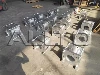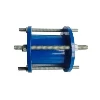
If you’ve ever walked through an industrial plant, you’ve likely seen metal pipes snaking across ceilings, snaking around machinery, and stretching from one end of a processing unit to another. These pipes do a critical job, but they face constant stress: thermal expansion, vibration, pressure fluctuations, and the natural settling of heavy equipment over time. That’s where bellows expansion joints come in—those flexible, accordion-like components that act as the pipes’ shock absorbers, accommodating movement and preventing costly damage to the entire system.
At our pipe bellows expansion joint supplier, we’ve seen firsthand what happens when these joints fail. Overextension is one of the most common causes of bellows breakdown, and it’s also one of the most preventable. A bellows that’s stretched beyond its rated limit doesn’t just lose flexibility—it can rupture, leak, or trigger a chain reaction of failures that shut down entire production lines. In my 12 years working with industrial piping systems, I’ve learned that overextension rarely happens by accident. It’s usually the result of poor planning, incorrect installation, or a lack of understanding about how expansion joints interact with the rest of a piping network. Today, I want to share the practical, science-backed strategies we use to help our clients avoid this costly mistake—plus a few key product solutions we recommend for high-stakes applications.
First: Understand What Bellows Overextension Actually Is
Before we dive into prevention, let’s get clear on the problem. A bellows expansion joint is designed to move within a specific range—called its “axial movement rating.” This is the maximum amount of length the joint can stretch or compress without damaging its internal corrugations. Overextension occurs when the joint is pulled beyond this upper limit. The thin, wavy metal of the bellows isn’t made to withstand constant tension beyond its design; corrugations can crack, fatigue, or permanently deform, leading to leaks that can contaminate products, release hazardous materials, or bring operations to a halt.
The worst part about overextension? It’s often invisible until it’s too late. A joint might look fine on a routine inspection, but internal stress from repeated overextension builds up over time, leading to premature failure. We once worked with a food processing plant that ignored minor overextension on a stainless steel bellows expansion joint for six months. By the time they noticed a pinhole leak, their entire batch of raw ingredients was contaminated, costing them over $200,000 in lost product and downtime. That’s the kind of preventable loss we’re determined to help clients avoid.
The #1 Cause of Overextension: Poor Movement Calculation
Nearly 70% of overextension cases we’ve investigated trace back to incorrect axial movement calculations. Most piping engineers focus on thermal expansion alone, but they forget to account for other factors that add to the total movement the joint will experience. Let’s break down the key variables you need to include in your calculations:
1. Thermal Expansion (The Big One)
When a pipe heats up, it expands; when it cools, it contracts. For example, a carbon steel pipe that’s 100 feet long will expand about 1.2 inches for every 100°F increase in temperature. If your process goes from 70°F (ambient) to 350°F (operating), that’s 3.3 inches of total thermal expansion. Many teams calculate this number, but they don’t leave a safety margin. Here’s the rule of thumb we share with all our clients: always add a 15-20% safety buffer to your calculated thermal expansion. This accounts for unforeseen temperature spikes, like when a process runs at a higher rate than planned, or a shutdown isn’t as long as expected.
2. Mechanical Movement
Thermal expansion isn’t the only force pulling (or pushing) on a bellows. Your piping network has other moving parts: vibration from pumps or compressors, settling of equipment over time, misaligned flanges during installation, and even the weight of the pipe itself. For instance, a 50-foot pipe running horizontally between two pieces of heavy machinery will sag slightly over time due to gravity. This sag can add extra axial movement to the expansion joint, pushing it beyond its limit if you didn’t account for it.
3. Pressure Thrust
This is a less talked-about factor, but it’s critical. When fluid flows through a pipe under pressure, it creates a force that pushes the bellows in the axial direction. If your system is operating at 150 psi and your bellows has a 12-inch diameter flange, the pressure thrust force is over 16,000 pounds—enough to stretch a standard bellows if you don’t account for it in your design. For high-pressure systems, we often recommend Pressure Balanced Expansion Joints, which are specifically engineered to counteract this thrust force and reduce the load on the bellows. You can learn more about these here: Pressure Balanced Expansion Joint.
Choose the Right Bellows Type for Your Application
Once you have an accurate picture of the total movement your joint will face, the next step is selecting the right bellows expansion joint. Not all joints are created equal, and using the wrong type for your application is a common recipe for overextension. Let’s look at the most popular options we supply and when to use them:
Universal Tied Metal Expansion Joints
These are the workhorses of many piping systems. They consist of two bellows connected by tie rods that limit the axial movement to a set amount, preventing overextension. The tie rods are adjustable during installation, so you can set them to match your exact required movement range. We often recommend Universal Tied Metal Expansion Joints for general industrial piping, HVAC systems, and low-pressure process lines. They’re versatile, easy to install, and built to control axial movement exactly where you need it. Check them out here: Universal Tied Metal Expansion Joint.


Stainless Steel Bellows Expansion Joints
Stainless steel is the most common material for bellows because it’s durable, corrosion-resistant, and able to handle high temperatures. If you’re working with corrosive fluids, high-temperature processes, or food-grade applications, stainless steel is non-negotiable. The right stainless steel bellows will have a clearly marked axial movement rating, so you know exactly how much it can stretch. We supply a range of stainless steel options, including ones with square flanges that fit perfectly with standard pipe connections. Find out more: stainless steel bellows expansion joints.
Stainless Steel Exhaust Bellows
Exhaust systems face unique challenges: high temperatures, corrosive gases, and constant vibration. Overextension here is particularly risky because a ruptured exhaust bellows can release toxic fumes into the air. Our Stainless Steel Exhaust Bellows are engineered with reinforced corrugations and a precise axial movement rating to handle the extreme conditions of exhaust systems. They also include internal liners for corrosion resistance, making them ideal for automotive, power generation, and industrial exhaust applications. Learn more: Stainless Steel Exhaust Bellows.
Corrugated Flexible Metal Hose
In some cases, you need a joint that can handle not just axial movement, but also angular or lateral movement (like when a pipe shifts side to side). Corrugated Flexible Metal Bellows (or hoses) are designed for this, with a more flexible structure that can accommodate multiple directions of movement. While they don’t have the axial load capacity of tied universal joints, they’re perfect for applications where movement isn’t just linear. They’re also easy to install in tight spaces, making them a favorite for retrofits. Explore them here: Corrugated Flexible Metal bellows.
Installation Best Practices to Avoid Overextension
Even if you calculate movement correctly and choose the right bellows, a bad installation can still lead to overextension. Here are the steps our installation team follows to get it right every time:
1. Set the Bellows to the Correct “Cold Position”
Most bellows expansion joints are marked with a “cold set” length—this is the length the joint should be at when the system is not in operation (i.e., at ambient temperature). During installation, you need to adjust the joint to this exact length, not stretched or compressed. If you install it too short, when the pipe heats up and expands, it will pull the joint beyond its rated axial limit. If you install it too long, the joint will be compressed, which can cause its own set of problems (like buckling) that can also lead to failure. We always provide detailed cold set instructions with every joint we supply, and we recommend using a laser measuring tool to ensure accuracy.
2. Use Proper Flange Alignment
Misaligned flanges are a top cause of installation-related overextension. If the two flanges connecting the bellows to the pipe are not perfectly aligned, the joint will be forced to stretch slightly to fit, putting internal stress on the corrugations. This stress builds up over time, leading to fatigue and overextension. Our team always suggests using flange alignment tools to check for angularity and concentricity before tightening bolts. Even a 1-degree misalignment can reduce a bellows’ rated movement by 10% or more.
3. Install Limit Rods or Guides When Needed
Limit rods are not just for universal joints—they’re a simple, effective way to prevent overextension in almost any piping system. These rods attach to the flanges on either side of the bellows and set a maximum distance the joint can stretch. They’re adjustable, so you can set them exactly to your calculated total movement range. For systems with high thermal expansion or pressure thrust, adding limit rods is a cheap insurance policy against overextension.
4. Account for Equipment Settlement
One mistake many engineers make is assuming that the equipment connected to the pipe will stay in the same position forever. Over time, heavy machinery can settle into the ground, or foundations can shift due to soil movement. This changes the distance between the two ends of the pipe, which can pull the bellows beyond its rated length. We always recommend adding 5-10mm of extra movement to your calculation to account for future settlement. It’s a small addition that saves a lot of headaches later.
Regular Maintenance: Catch Overextension Before It Causes Failure
Even the best-designed and -installed bellows will wear out over time, but regular maintenance can catch overextension early. Here’s what our maintenance team advises clients to do:
- Monthly visual inspections: Look for signs of overextension, like stretched tie rods, misaligned flanges, or visible gaps between the bellows and the flanges. If you notice a gap larger than the bellows’ rated axial movement, it’s a sign the joint is being overextended.
- Annual movement testing: Use a tape measure or laser tool to check the actual length of the bellows at ambient temperature. Compare it to the cold set length from the manufacturer. If it’s longer than the cold set plus your designed movement, that’s a red flag.
- Monitor system temperatures: Keep track of process temperatures over time. If you notice that temperatures are consistently higher than your original design, that means your pipes are expanding more than planned, and the joint is at risk of overextension. You may need to adjust your limit rods or upgrade to a joint with a higher movement rating.
When All Else Fails: Replacement Options for Overextended Joints
If you do discover that a bellows is overextended, don’t panic. Replacing it is often cheaper than fixing the damage it can cause. At our company, we offer quick lead times for replacement bellows, including custom options for non-standard applications. For example, if you have a high-temperature exhaust system that’s overextending, we can supply custom Stainless Steel Exhaust Bellows with reinforced corrugations and limit rods to fit your exact setup. For systems with high pressure thrust, our Pressure Balanced Expansion Joints can reduce axial load by up to 90%, preventing overextension even in demanding environments.
Final Thoughts: Overextension Is Preventable
At the end of the day, avoiding bellows expansion joint overextension comes down to planning, choosing the right product, and taking the time to install and maintain it correctly. There’s no magic trick—just a commitment to getting the details right. Over the years, we’ve seen too many clients lose money because they cut corners on calculations or installation, but we’ve also seen how a little extra care can save them from costly downtime.
If you’re working on a new piping system, or if you suspect your current joints are at risk of overextension, we’re here to help. Our team of engineers can review your application, calculate your required movement, and recommend the perfect bellows expansion joint for your needs. Whether you need a standard Stainless Steel Bellows Expansion Joint, a Pressure Balanced unit for high pressure systems, or a Universal Tied Metal Expansion Joint for general use, we have the solutions to keep your system running smoothly.
Ready to talk through your project and find the right bellows expansion joint for your needs? Contact us today to start the conversation.
References
- Parsons, W. (2019). Bellows Expansion Joint Design and Installation Best Practices. Industrial Piping Engineering Journal, 45(2), 112-125.
- American Society of Mechanical Engineers (ASME). (2021). B31.3 Process Piping Code: Requirements for Expansion Joint Movement. ASME International.
- Smith, J. et al. (2020). Failure Analysis of Metal Bellows Expansion Joints: Causes and Prevention. Journal of Pressure Vessel Technology, 142(3), 031702.
- Miller, L. (2018). Thermal Expansion Calculations for Industrial Piping Systems. Plant Engineering Magazine, 72(5), 45-50.