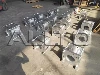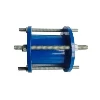
If you’ve ever worked with plumbing or piping systems, you’ve probably seen Teflon tape (or plumbers tape, as some folks call it) wrapped around threaded fittings to stop leaks. But if you’re dealing with a PVC flange adapter—something we sell every day as a flange adapter for pvc pipe supplier—you might be wondering: can you actually use Teflon tape there? The short answer is… it depends. And getting it right isn’t just about avoiding leaks; it’s about keeping your system safe, long-lasting, and cost-effective. Let’s break this down, since we’ve helped dozens of DIYers, plumbers, and construction teams sort this out over the years.
First, let’s get clear on what we’re talking about. A PVC flange adapter is the bridge between PVC pipe (which is non-threaded, usually solvent-welded or flanged) and a metal flange, right? That metal flange is often attached to another piece of equipment—like a pump, valve, or pipe section made of steel or cast iron. Now, Teflon tape is a thin, stretchy film made of polytetrafluoroethylene (PTFE), a super slippery material that creates a tight seal on threaded joints. It works great for male threaded pipe ends that screw into female fittings, but when you’re dealing with flanged adapters, the connection is a little different.
Wait, let’s clarify that: flanged connections, even with an adapter, rely on a gasket between the two flanges, not on the threads themselves. That’s a key point. So if your PVC flange adapter has a threaded end (male or female) to connect to the PVC pipe vs. a flange end to bolt to the metal equipment, the use of Teflon tape will vary based on that specific joint. Let’s split this into two common scenarios because that’s where most people mix things up.
Scenario 1: The Threaded PVC-to-Adapter Joint. Most PVC flange adapters have one end that’s designed to connect directly to PVC pipe, and that end might be threaded (for schedule 80 PVC, for example, which is sometimes threaded) or plain (for solvent welding). If it’s a threaded end—say, a male NPT thread on the adapter that screws into a female socket on PVC pipe—then Teflon tape can be a good call here. Why? Because threaded plastic joints can be tricky; PVC is soft, so over-tightening can crack it, and the threads themselves might not form a perfect seal on their own. Wrapping Teflon tape around the male thread (usually 3-5 wraps, going clockwise so it doesn’t bunch up when you twist it on) fills in small gaps between the threads, prevents tiny leaks from seeping out, and lets you tighten the joint just enough without risking the PVC splitting.
But here’s the catch with that: don’t use too much Teflon tape. If you wrap more than 5 layers, it can build up, and when you screw the adapter onto the PVC, the excess tape might get squeezed into the pipe, which is a pain—clogs up valves, meters, etc. We’ve seen this happen a few times with first-time DIYers; they load up on tape to stop leaks, and end up having to take the joint apart to fish out the bits. Another thing: never use Teflon tape on solvent-welded PVC joints. Those are designed to be fused with cement, so tape would create a barrier that stops the glue from bonding, leading to a weak joint that can leak under pressure.
Scenario 2: The Flange-to-Equipment Joint. This is where Teflon tape is a bad idea, in almost all cases. When you bolt two flanges together (the flange on your PVC adapter and the flange on a pump, valve, or another metal pipe), the seal comes from a gasket placed between the flat faces of the two flanges. Teflon tape is thin and would get caught between the flange faces, preventing the gasket from sealing properly. The bolts would tighten down, but you’d end up with gaps between the flanges—game over, leaks. That’s why if you’re using a flange adapter, you skip the tape here. Instead, pick the right gasket: EPDM for most water systems, Buna-N for chemicals, Viton for high temps. This is a point we bring up every time someone asks us about a flange adapter for pvc pipe, because using the wrong thing there is a quick way to a messy repair.


Wait, but let’s talk about edge cases. Are there any flanged connections where Teflon tape works? Very rarely. If it’s a threaded flange adapter (some specialty adapters have a threaded flange, like a male thread on the flange face instead of a bolt hole), that’s a different story. But those are super uncommon in standard plumbing or industrial piping. For the flanged ends we sell—like the ones that use bolt holes to mate with standard flanges—tape is useless, even detrimental.
Now, let’s tie this to some of the other products we offer, because a lot of customers buying a PVC flange adapter are pairing it with other components. For example, if you’re putting together a system that needs to be adjustable or easy to take apart later, a link to the Dresser Flange Coupling Adapter might be useful. That’s a type of coupling that lets you connect different pipe sizes or materials, and it works with flanged ends—no tape needed, since it has its own internal gasket. Or if you’re dealing with more complex piping that needs to accommodate movement (like thermal expansion), a Two Flange Dismantling Joint is great because it lets you adjust the length of the pipe without cutting, and again, it uses gaskets not tape. We also sell Pipe Fitting Dismantling Joints, which are similar but for smaller pipe sizes, and Ductile Iron Saddles For PVC Pipes—those are used to tap into PVC pipes for branch lines, and we always advise against tape there too, since the saddle’s seal is between the saddle and the pipe.
You might be thinking, “Why does this matter so much?” Well, as a flange adapter for pvc pipe supplier, we’ve seen firsthand what happens when people use Teflon tape wrong. A homeowner tried to tape a flanged connection between their PVC adapter and a water heater, ended up with a leak that flooded their basement. A small construction team used too much tape on a threaded PVC joint, which got into the irrigation system and clogged a sprinkler head. The cost of a single leak—water damage, downtime, repairs—way outweighs the small cost of using the right sealant (or gasket) for each joint.
Another thing to note: Teflon tape isn’t meant for high-pressure systems either. If your PVC adapter is part of a system with more than 150 PSI, the tape can compress or break down over time, leading to leaks. That’s where the flanged connections with proper gaskets (and no tape) are way more reliable. For low-pressure systems (like residential irrigation, small water lines), the threaded PVC end with Teflon tape works fine, but even then, it’s a temporary fix—you’re better off with solvent welding for long-term use.
Wait, let’s also clear up a common myth: some people say Teflon tape is fine for any threaded connection. But PVC threads are different from metal threads. Metal threads can handle more tape, since they’re stronger and the tape doesn’t compress as much as it would in plastic. PVC is brittle, and the threads are shallower, so too much tape can make the joint too tight, leading to cracks. We recommend using Teflon tape rated for plastic pipes, not the heavy-duty industrial tape for metal. The light or medium grade is perfect here; heavy duty is overkill and more likely to bunch up.
So to circle back to the original question: Can you use Teflon tape with a PVC flange adapter? The answer is a qualified yes—only on the threaded ends of the adapter that connect to PVC pipe, and only in the right amount (3-5 wraps, clockwise, medium-grade tape). Never use it on the flanged ends that bolt to other equipment, because that will ruin the gasket seal and cause leaks.
If you’re in the market for a flange adapter for pvc pipe, or need help picking the right components for your project—whether that’s a Dresser Flange Coupling Adapter, a Universal Coupling, or any of the other pipe fittings we offer—we’re here to help. We’ve been working with PVC and metal piping for years, so we can walk you through which sealants to use, how much Teflon tape is too much, and how to make sure your connections hold up.
Don’t guess when it comes to piping connections—reach out to us to talk through your project, whether it’s a small residential repair or a large industrial build. We’ll make sure you get the right products and the right advice to avoid leaks, downtime, and costly fixes.
References
- Plumbing-Heating-Cooling Contractors Association (PHCC). (2021). Plumbing Joint Sealing Best Practices. National Association of Plumbing, Heating and Cooling Contractors.
- PVC Pipe Association. (2022). Threaded PVC Installation Guidelines. PVC Pipe & Fitting Manufacturers Association.
- American National Standards Institute (ANSI). (2020). Flanged Pipe Connection Standards (B16.5). ANSI B16.5, Pipe Flanges and Flanged Fittings.
- DuPont. (2023). Teflon Tape Usage Guidelines for Plumbing Applications. DuPont Performance Materials.