


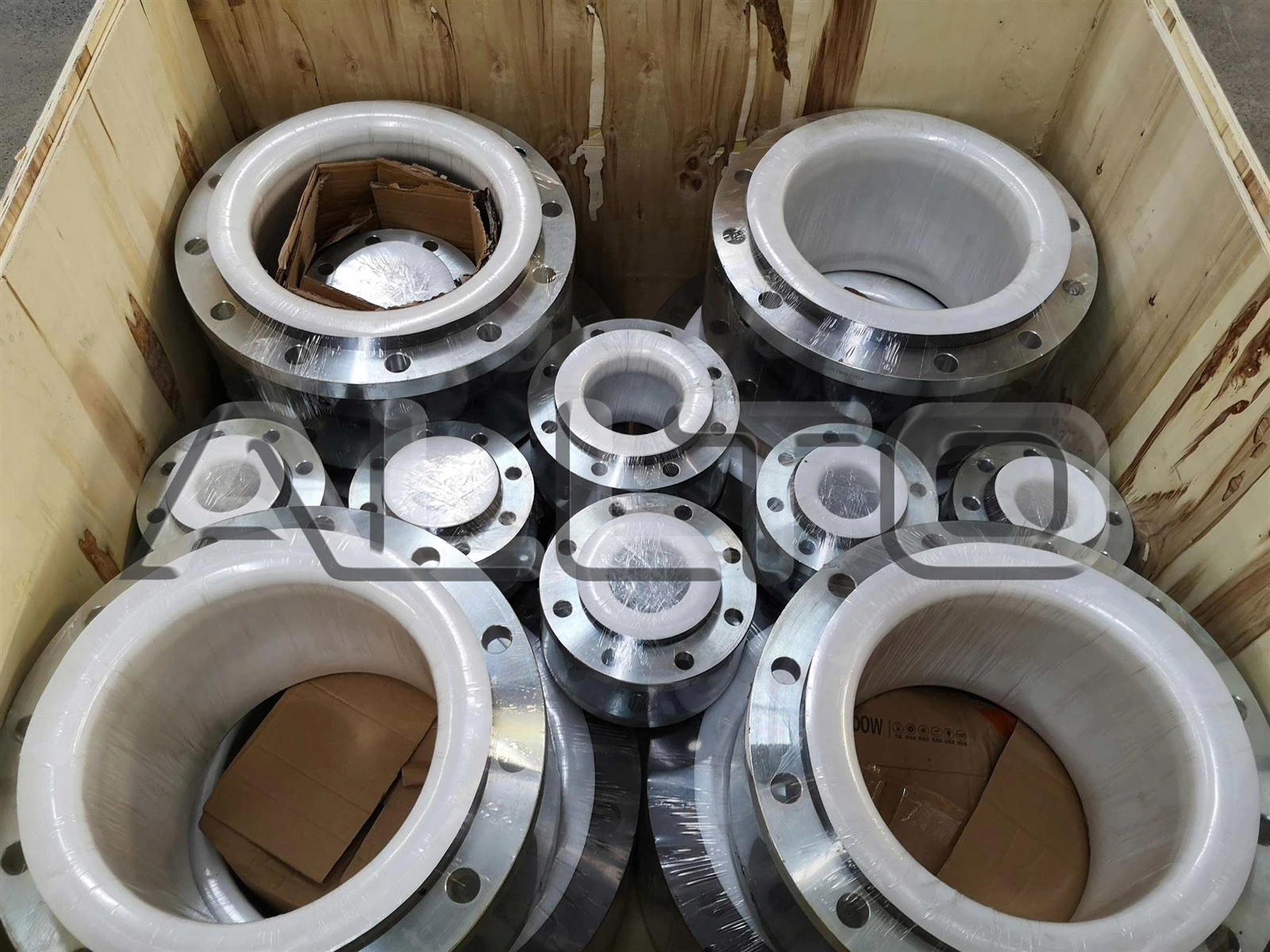
Regular rubber expansion joints don't hold up well in harsh working conditions. They easily swell, age or get damaged when carrying corrosive acids, alkalis and chemical fluids, which is why PTFE lined rubber joints have become such a popular upgrade for industrial piping systems.
What makes these lined joints stand out is their dual-layer design. The inner PTFE liner delivers incredible chemical resistance, fully shielding the outer rubber body from aggressive media. This stops common issues like rubber blistering, delamination and medium leakage that frequently happen with standard rubber connectors.
Another practical advantage is the PTFE's natural non-stick surface. It resists residue buildup and scaling inside the pipe, keeping fluid flow smooth and lowering the risk of blockages. It's also chemically inert, so it won't contaminate clean media, making it ideal for pharmaceutical, pure water and fine chemical projects.
The outer rubber layer still retains all the flexibility you need. It effectively absorbs thermal displacement and reduces vibration from pumps and equipment, stabilizing the entire pipeline operation.
When picking the right model, there are a few key details worth checking. Integrally molded PTFE liners offer better tightness and durability for medium and high-pressure pipelines, while composite lining works fine for low-pressure regular use. If your system runs under negative pressure or vacuum, be sure to choose vacuum-reinforced types to prevent liner collapse.

For external rubber material, EPDM is the better pick for outdoor installations thanks to great UV and aging resistance, while natural rubber suits standard indoor room-temperature pipelines.
These versatile joints are widely used in chemical processing, electroplating lines, corrosive wastewater treatment and new energy fluid delivery. For any piping project dealing with corrosive media, PTFE lined rubber expansion joints are always a more reliable and long-lasting solution.


