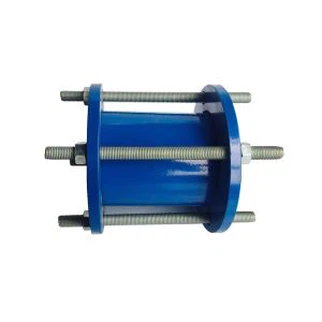

When connecting rubber joints to pipe flanges, make sure to tighten the bolts and screws evenly and symmetrically. Avoid over-tightening on one side, as this can damage the rubber joint by compressing or stretching the threads unevenly. If you do need extra tightening on a particular area, add a flat washer, and *always* use spring washers to prevent the nuts from loosening-especially since rubber joints are often used in wet or oily environments.To prevent excessive compression on pumps and pipes (which can happen if the rubber joint is too short), it's a good idea to install movement-limiting devices on the flanges at both ends.

Making a rubber joint is a pretty involved process. First, you need high-quality rubber, which is then shaped and formed. Next, steel wire or cable is embedded inside the rubber to make it stronger and more resistant to pressure. Finally, the rubber is heated and vulcanized to create a single, solid piece where the rubber and steel are tightly bonded.
The benefits of installing rubber joints at a pump's outlet are; To reduce vibrations, to account for thermal expansion and contraction, and to make it easier to remove and maintain valves. A typical installation sequence would be: rubber joint, check valve, then gate valve. It's best to install the pressure gauge at the pump's outlet, but *before* the check valve. Since gate valves aren't used as often as check valves, the check valve is more likely to need maintenance. This way, the gate valve on the pump's output pipe can be closed for repairs without disrupting the whole system. If the pressure gauge is installed before the check valve, it protects the gauge from water hammer damage.