


1.Pump Room Equipment Installation and Acceptance
Standard Reference: Code for Design of Building Water Supply and Drainage (GB 50015-2019)
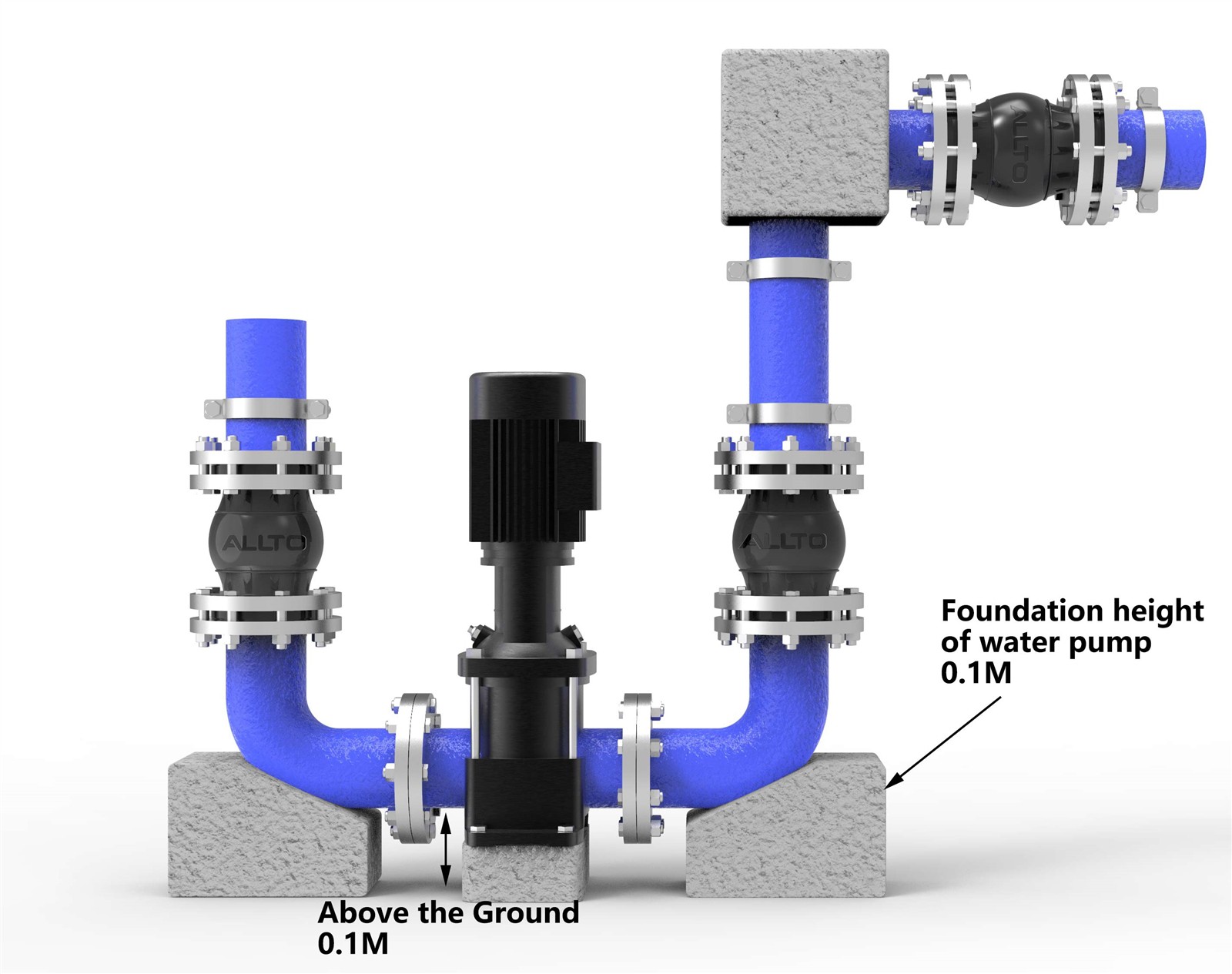
1.The height of the pump foundation above the ground should facilitate pump installation and should not be less than 0.10m. The distance from the outer bottom of the pipeline in the pump room to the ground or the bottom of the trench. When the pipe diameter is not greater than 150mm, it should not be less than 0.20m; when the pipe diameter is greater than or equal to 200mm, it should not be less than 0.25m.
2.There should be a pump maintenance area in the pump room. The size of the maintenance area should be determined by a channel of not less than 0.7m around the outer dimensions of the pump or motor. The width of the front channel of the electrical control cabinet arranged in a single row in the pump room should not be less than 1.0m. Manual lifting equipment should be installed in the pump room as appropriate.
3.The arrangement of pump units should comply with the provisions of Table.
| Motor Rated Power /kW | Minimum Distance between the Outer Contour of Pump Unit and Wall /m | Minimum Distance between the Outer Contours of Adjacent Pump Units /m |
|---|---|---|
| ≤22 | 0.8 | 0.4 |
| >22, <55 | 1.0 | 0.8 |
| ≥55, ≤160 | 1.2 | 1.2 |
Notes: 1. When there are pipelines on the side of the pump, the outer contour is measured to the outer surface of the pipeline. 2. A pump unit refers to a combination of a pump and a motor, or a combination of multiple pumps already installed on a metal frame.
Standard Reference: Code for Design of Building Water Supply and Drainage (GB 50015-2019)
When low-noise pumps are not used in the pump room, the following vibration and noise reduction measures should be adopted:
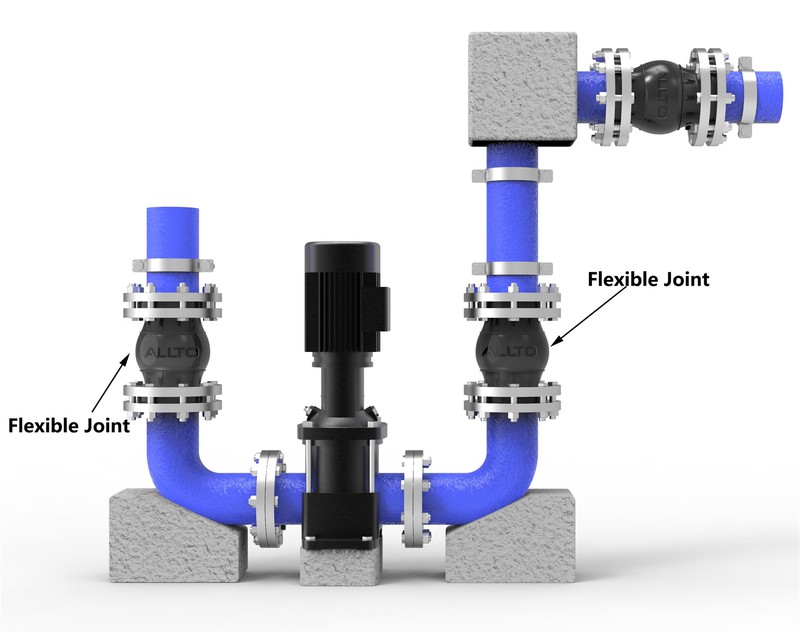
1.Vibration reduction devices should be installed at the water inlet and outlet of the pump.
2.Vibration reduction devices should be installed at the base of the pump unit.
3.For pipe racks, hanger supports, and at the connections of pipelines and equipment, measures should be taken to prevent solid-borne sound transmission.
4.If necessary, sound insulation and absorption treatment should be adopted for the walls and ceiling of the pump room.
(With corresponding images of incorrect and correct practices: Incorrect practice - Improper installation of rubber vibration reduction, resulting in loss of vibration reduction function; Correct practice - Standard installation of vibration reduction devices.)
2.Indoor Hot Water Supply System Installation and Acceptance
tandard Reference: Code for Construction Quality Acceptance of Building Water Supply and Drainage and Heating Engineering (GB 50242-2002)

After the installation of the hot water supply system is completed, the pipeline system should undergo a pressure test. The test pressure should meet the design requirements. When the design is not specified, the test pressure for the hot water supply system should be 0.1MPa higher than the working pressure at the top of the system, and the test pressure at the top of the system should not be less than 0.3MPa.
Inspection Method for Steel Pipes: The system should be tested under the test pressure for 10 minutes, during which the pressure drop should not exceed 0.02MPa, then it should be reduced to the working pressure for inspection, and the pressure should not drop, and there should be no leakage.
Inspection Method for Plastic Pipes: The system should be tested under the test pressure for 1h, during which the pressure drop should not exceed 0.05MPa, then it should be tested under the working pressure for stability, the pressure should not exceed 0.03MPa, and there should be no leakage at the joints.
The pipeline layout of the hot water supply system should make use of natural bends for thermal expansion and contraction as much as possible. If the straight section is too long, expansion compensators should be installed. The type, specification, and location of the compensators should meet the design requirements and relevant specifications, and should be stretched as required.
3.Indoor Water Supply System Installation and Acceptance
Standard Reference: Code for Construction Quality Acceptance of Building Water Supply and Drainage and Heating Engineering (GB 50242-2002)
The diameter and length of the nuts for connecting flanges should meet the standards. After tightening, the length of the protruding nut should not be greater than 1/2 of the diameter of the screw rod.
Standard Reference: Technical Specification for Pump Vibration Isolation (CECS59:94)
When the special flange of the flexible rubber joint for flange connection is connected with the ordinary flange, the screw rod of the bolt should face the ordinary flange side.
(With corresponding images of incorrect and correct practices: Incorrect practices - Excessive protruding nut, wrong bolt orientation; Correct practice - Correct bolt orientation.)


